Showing posts with label respect. Show all posts

Saturday, August 30, 2008

Saturday's Bits and Blurbs/Kindergarten Teacher Tip


*****

I finally caught up a bit on politics this week... Democrats, Republicans, Independents, let's not just put on a good show, let's do some *real* good for this nation. Please.

*****

~Teachers, check out The Student Bill of Rights over at The Elementary Educator. Mark Pullen hit the nail on the head with this one, demonstrating pro-student advocacy over the priorities some teachers insist upon, usually for their own convenience.

~Jennifer at Inside Pre-K posted a blog that capped off my week, "Oh, So They Just Play..."

One of the reasons for my off-mood last week was the abundance of clueless-about-kindergarten statements that were made to me or about my students by colleagues. Everything from "wow, it must be hard to teach kindergartners, I mean, because those little guys can't do anything" to "hey, your one girl, the medicated one? I don't think she's medicated enough..."

Early childhood and kindergarten do tend to be grades that teachers either love or avoid like the plague. A room full of five year olds can frighten adults who are uncomfortable around runny noses, accidents, spills, outbursts, loco-motoring through story re-tellings, broken crayons, and yes, hand holding when it comes to learning how to cut, hold a pencil, or tying shoes. I am not a person who is bothered or annoyed by those things, because I understand that every person alive, at one point or another, experienced this developmental stage, learned through it, had fun in it, and is, in part, alive and successful today because of it. They learned how to cooperate, they learned how to decipher the chicken scratch that is writing, they learned to obtain information from not just the printed word, but illustrations and verbal communication from teachers and classmates. They learned to recognize patterns, sort, classify, count, evaluate, re-arrange, build, and use tools and materials around them. They learned to create, learned new techniques, asked questions, shared joy, and made friends. They learned to take care of their personal needs, and with the right teacher, they learned that school was a good place to be and a safe place to try out activities new and unfamiliar. While many of my colleagues don't remember their kindergarten years, let me gently remind you all: you didn't master "being at school," fine motor skills, social skills, or demonstrate academic prowess in the first twelve days of your kindergarten year. In fact, you didn't master them for much, MUCH longer. Take a breath. Think before you speak, and please stop speaking about my students within earshot of them (by the way, we can hear your cackles and criticisms around corners, where we're waiting, quietly lined up, for our turn with you). None of you have heard me say something like "Oh those third graders" or "Oh, all those students in the upper grades," have you? Nope. Because I understand that while I haven't taught third graders or secondary students, they are NOT incomplete or inadequate people because they haven't yet mastered the school curriculum in a way that is convenient or ideal for you or me.

And new kindergarten teachers...if anyone approaches you with the classic "Oh, you teach kindergarten? So you just PLAY all day, right?" statement, just remember: most people play to learn and spend their lives trying to obtain mastery. Don't believe me? Watch a colleage be introduced to a new computer program that s/he has to use for work. Then watch them play computer Solitaire, or Concentration, or type a letter to a friend. What are they doing? Practicing and developing techniques that will help them when they use the new computer program. Ever see an adult pick up a new hobby like knitting or painting? Were they experts on the first try? Nope. They made mistakes. Probably got frustrated a few times along the way too. *Might* have even thrown the paintbrush or knitting needles aside..."this is too hard!" Sound like some five year olds you might know?


*****

New Teacher Tip: For those of you who have a general elementary education degree, you can usually be credentialed to teach grades K-6 or even K-8. If you've been hired to teach kindergarten after your practicum experience has been in any grade OTHER than kindergarten, you're probably in shock right now, especially if you didn't have to take early childhood development courses for your major. My advice? TAKE SOME ECHD COURSES PRONTO. Kindergarten is NOT the same as grades 1-6, and it is NOT "easy" like babysitting either. FIND BOOKS, ARTICLES, AND BLOGS ABOUT TEACHING FOUR TO SIX YEAR OLDS, find out who a "master kindergarten teacher" is in your district, apply to take a day's leave from your class and go observe that teacher. Ask permission to take your digital camera. Take notes. Ask questions. Keep in touch.

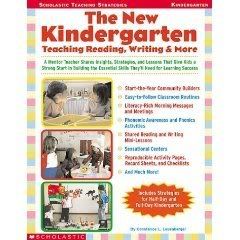
Scholastic's The New Kindergarten


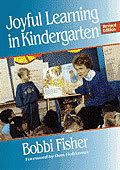
Joyful Learning in Kindergarten


*****

Thursday, December 13, 2007

Using My Teacher Voice

I have a teacher voice. A mommy voice too. Being a kindergarten teacher and mother means that my "voice" doesn't match the voice of a drill sergeant, doesn't match the voice of a ticked off assistant principal in a high school, and certainly doesn't match the voice of an assertive police officer in a touchy situation. I have to *explain* as I make a request, because the young ones I tend to deal with don't have as much background knowledge or frames of reference that will clue them in quickly to what I need modified or addressed. Emergency situations are an entirely different matter, as no one misses or ignores any tone I use with alarm, and no one needs an explanation before trying to determine if they feel any motivation to respond as quickly as possible when they hear me use it.

We attended my daughter's Christmas band concert this evening. It might have been an enjoyable event if only the audience's behavior wasn't such a long, drawn out train wreck. My blood pressure rose as my anticipation of my daughter's performance plummeted. Teens and their siblings ran through the audience in the gym, running up to orchestra and band members snapping pictures on cell phones as the performers were warming up and tuning their instruments. Parents loudly chatted, played with cell phone ringers (no, they weren't turning them off), and ignored their offsprings' shouts, inappropriate comments and choice of vocabulary. I withstood four hits to the back of my head from teens running up and down the bleachers, not a single apology uttered once. Full-fledged conversations were being had in regular speaking voices throughout the first two musical pieces performed, and those of us who turned around to look at the chatters got rolled eyes, laughter and pointing as a response. Finally, I put my hand on a student's foot (he had been kicking my side tapping his foot offbeat to the music) and whispered "Sweetheart, it's not your turn to talk or make noise, it's your turn to listen." I followed it with a smile, and received a quick blush and nod in return.

My teacher voice worked on one student out of nine. You see, once young Master Foot was seen correcting his behavior, his cronies had to get louder and more obnoxious, perhaps in some attempt to avenge his honor. And every parent around me *let it go.* I watched a handful of other parents try to move inconspicuously away from other obnoxious teens and children, to no avail. There was no escape, no quiet area where we could listen for our child's solo, listen to inspiring music, or enjoy the progress the band had made since the beginning of the year. I just about left the concert in tears, only because my other reaction would have been to have taken children by the collars to their parents and demanded an answer to "what the he** are you thinking?!?!?!?!?!"

I spent the first ten years of my life in this very Bordertown, living on the "poor" side of the mountain, maybe a mile from where we're posted now, so I know it wasn't always like this. I remember when the haves and the have nots equally spent time raising children to be welcome. Immigrant or local, English-only, Spanish-only, or bilingual speakers, all parents, grandparents, and neighbors encouraged (required!) children to say "please, thank you," and "apologies." "Excuse me," "no thank you," yes Ma'am, yes Sir," were also regularly heard and rewarded with "what good manners you have!" Young children were left with babysitters, children old enough to attend performances were expected to sit still, save questions for later, and make necessary comments quietly. They understood the audience wasn't there to see them, they were there to see the performers. Every school-aged child in the district attended two theater performances a year as a district requirement, and yes, we knew the expectations our teachers and families had of us. No longer, apparently.

As a side note, I'll offer that it's difficult to keep an audience on track and engaged when both the band and orchestra directors apparently have no clue when it comes to the choreography required when beginning, intermediate, and advanced musicians all perform on the same night, in this case, on the same gym floor. I'm fairly certain my old orchestra teacher, Mr. H., has passed on, and is probably rolling in his grave. If Mr. A. is still alive and kicking, he's certainly been admitted to the Looney Bin by now if he's witnessed performances like this, by both students and directors alike.

So, using my teacher voice, here are some suggestions (not that the local teens, teachers, parents, or musical directors care):

1) Please learn that there are times when it's your turn to talk, and times when it's your turn to listen. You don't always get to choose which times happen when. Consideration isn't a sign of weakness, it's a sign of respect, respect you'll receive in return.

2) Even if no one has formally taught you how to behave at concerts, plays, debates, worship services, or meetings, it's okay to read the cues provided by the seemingly more reflective, calm, and observant audience members, and follow their lead. No, Joey belching out the alphabet during a band performance of the Hallelujah Chorus is not the best choice of role model. Sorry.

3) There is a difference between a musical or theatrical performance and a pep rally. Therefore there is a difference between the behaviors demonstrated at those events. Figure out the difference, and behave accordingly.

4) Just because your sister told you that Mary Jane was going to dye her hair blue before a concert doesn't mean that once you get to said concert you need to shout out at EVERY inopportune time "HEY MARY JANE, LOVE THE DOPE HAIR! WOOT WOOT!" Either quietly admire the hair, or laugh about it under your breath, but either way, talk to Mary Jane AFTER the concert please. She'll wait. Really.

5) School band concerts are actually not precursors to American Idol audience tapings, Jerry Springer reruns, or reality show soap operas. If you're in the audience, I'm sorry, but it's not about *you*. It's about the people who have practiced, learned, developed and are sitting on stage now sharing with others. You don't get the stage, therefore you don't get the attention. It's not your turn all of the time, no matter what You Tube, MySpace, and your lazy or absent parents have led you to believe.

6) Band and orchestra directors, when you're rotating different groups of performers in and out of the performance or "stage" areas, *stop rearranging the furniture* and taking twelve minutes (yes, TWELVE) to rotate thirteen students out and twenty-three students in. It's very easy. Set up ALL of the chairs and music stands you're going to need. Then either choose to seat ALL band members, regardless of skill level together on stage, with students only performing when it's their turn (yes, those not performing are capable of sitting quietly with their instruments across their laps), OR center the beginning group in the middle of the seats, leaving the extras empty, and then have them all walk off, row by row, to the left after their performance while the next group of students is walking on-stage, row by row, from the right. If the next group is bigger, they'll take up more seats, but can still seat themselves center stage. Takes a *little* practice, but the end result is faster, safer, more efficient, and more professional than the thudding, crashing, and bashing of chairs, stands, and instruments (!), and the barking of directions to students too nervous to be listening and understanding clearly.

TWELVE MINUTES? No *wonder* you couldn't get the audience back for the closing pieces! DOPE HAIR, MARY JANE!!!!!

Oh wait, that wasn't my teacher voice, was it?

Tuesday, November 06, 2007

Good job Charlee!

... and when we have students, teens, young adults who care, have conviction, and demonstrate *class*, people like Rush Limbaugh don't like it.

Let's face it, what on earth would indigenous peoples know about the environment in which they live, and why would they care when their observations of and connections to said environment indicated problems (yes, sarcasm intended)?
map

Feel free to check out Tribal Lands Climate Conference

and of course, An Inconvenient Truth.

And don't worry, it's really OKAY if you let common sense creep into your very being, no matter what Rush is regurgitating. Good job Charlee!