Saturday, September 29, 2007

Colleague Care

nervous

...but until then, we'll do what we can to support each other through this interesting time.

I was raised in a family of teachers. I have rather vivid memories of not only events in my own kindergarten classroom thirty-three years ago, but of years and years and years of bulliten boards, schools, towns, school board meetings, parent teacher conferences, school carnivals, open houses and all of the other events that I accompanied my mother to or helped her with in Texas and Alaska. I did some more growing up while in college, choosing teaching as my field of study and profession. I wasn't too terribly observant of all of the educational history I was surrounded by, but a few tidbits here and there got my attention and had me thinking as I began teaching my own students. With my family, my master teacher's input and guidance during my professional year, and terrific mentor teachers as colleagues, those tidbits were sewn together, and after five years of teaching, I felt that I could reach out and invite practicum students and student teachers into my classroom.

I've made new friends and worked with new colleagues after relocating to the Lower-48, and have found these collegial relationships reflecting the fact that I have continued to grow older. No longer the newbie on the staff, nor the youngest, but not so old as to be thought of as "disenchanted" or merely "hanging out until retirement," teachers new to the profession come and ask me for input, advice, or ears to listen and shoulders to cry on when the going gets tough. Shrapnel from the CRT fiasco is still raining down on some of their shoulders and though I now live several states away, how they feel, what they think, and how they problem-solve to manage this situation and their own self-care matters to me greatly.

"Newer" teachers ask new and fresh questions and think of innovative and paradigm-shifting solutions to educational problems, but they also ask those basic questions that more experienced teachers have already moved past. More experienced teachers have been there, done that, and have moved on with their professional knowledge and development, and perhaps don't feel the need (or have the time) to share stories from their own educational histories with the colleagues that have recently graduated from college. When a former colleague expressed both hurt feelings and disappointment over teaching and posed a question on her blog about test scores, "...do they mean that a teacher isn't teaching or that a student isn't learning?" I was inspired to tell a few stories.


Ah, you're in mental-overload-mode now aren't you? That tends to happen to conscientious people such as yourself. As per our OTHER discussions, I'm not sure if the following comments will help stem the tide of professional disappointment for you or if they'll just take your mind zooming in another direction:

* Do low test scores mean that a teacher isn't teaching or that a student isn't learning? Good question. Can you answer it by putting a spin on it though: do HIGH test scores mean that a teacher IS teaching and that a student IS learning? Everyone would have you think so- teachers, administrators, board members, politicians, "experts," etc. but many of us have seen firsthand how reported test scores aren't accurate for whatever reason- a teacher's inexperience administering the assessment, a child's home life or start to that particular day, learning strengths and needs, behavioral issues, disturbances during testing, cultural or socio-economic biases... and don't forget "dumbing down" the test by making it easier so more kiddos will pass, timing the tests with the idea that smarter kids fill in bubbles faster (I still don't understand that one!) and that dreaded "no-no," fudging the scores.

I remember my friends in Barrow (an Eskimo village) years ago not understanding why they got a question "wrong" on the ITBS test. They were asked: what would be good to eat? a) a flower b) a chicken c) a whale d) a car. Now the Eskimo kids who had never SEEN a chicken but who annually helped haul bowhead whales onto the shore when the whaling captains landed "a strike" chose "C, whale." And they got it WRONG. Children who had butchered, cut up, cooked, and eaten bowhead whale had test scores that put them in whatever "needs help" category existed for the test. School experiences happened in isolation, ONLY AT SCHOOL, and "life" for the kids happened outside of school. Students were tested on subjects that were only applicable to them during the school day, not during the annual whale hunt that put food in their bellies and refrigerators.

So NCLB comes along with perhaps a Pollyanna view of reforms aimed to help those considered less fortunate... by ignoring the kids who don't "need" help because they score too high (have you seen any big push for gifted/talented kiddos lately?), making sure the average kids don't slip below their baseline, and by throwing a lot of school experiences at kids that are often only applicable to poor children when they're AT SCHOOL. And school funding is based on the kiddos who are least likely to apply school-knowledge in all aspects of their lives (usually because parents don't), so panic sets in when teachers, administrators, board members, and local politicians figure out that they are being judged on the performance of their lowest students, and they know they are NOT to fail. NCLB doesn't take care of the socio-economic issue or culture of poverty no matter what its proponents claim. The poor stay poor, but now parents, colleagues, and politicians can zing you for not doing their job.

* A lot of people are sucked into the drill that this "school reform" has created. I certainly did not get into teaching to become a revolutionary, a politician, a yeller and a screamer. Nor did I want to be a thoughtless drone, blindly following the commands of all of the "experts." I wanted to help students safely expand their knowledge and appetite for compassion and lifelong learning, and I wanted to work with colleagues who had the same goals. I hoped to be paid for doing something I LOVED, which I suppose is rather indulgent. I certainly do not love all of it now, and I've found that it is usually only with my students that I feel the most fulfilled and effective, the most "aligned" with my own personal goals for my job. What has gotten me through has been reaching out to other like-minded teachers. I was very lucky to have been raised in a family of teachers, a family of GOOD teachers. I was even more fortunate to have worked with the same group of colleagues for a decade before leaving Alaska. We were FAMILY, and while we didn't all agree, most of us felt safe in working together because of our professional mutual respect. When I moved to a new state, I was alone because of the grade I taught and the mood of my grade-level colleague. I had to do my own "professional development" because no one else talked my language. I stayed in touch with colleagues in Alaska, asked them to send me links or copies of materials they were finding useful, and bless them, they did it! I looked online, started finding websites that I could visit regularly so I could maintain some balance and not feel so isolated. When I moved to the next state and was hired, it took a lot of time to find balance between the DRAMA and the real educational issues that needed to be addressed. I had so much I felt I could share, and knew I needed and wanted others to share what they knew with me, but workplace psychology took up more time than should be allowed. So blogging, MySpace, and searching out other resources became a part-time hobby that helped my full-time teaching brain.

I encourage you to continue to reach out. Read some blogs, purposely seek out the thoughts and expressions of teachers from around the world. You won't feel so alone, you won't feel so judged, and you'll know there are a lot of other people out there on your side and on the side of your students.


I'm concerned that many first-year and newbie teachers are leaving college ready to work, ready to teach, and ready to blindly trust educational reforms, mandates, and practices that are not beneficial to students. Some of the newbies are so busy with the duck-and-dodge of their first classrooms and students that they're barely able to come up for air. Others are noticing a huge discrepancy between theory and practice now that they're out in the real world. Many, like my friends, are facing moral and ethical dilemmas as they decide whether or not to risk future tenure, letters of recommendation, and the ability to put food on their tables and clothes on their own childrens' backs by calling other more experienced teachers and administrators "out" for horrible educational practices.

hug

Friday, September 28, 2007

A Mental Clean Slate

brain dump
In anticipation of our next move (yes, still nine or ten months away) I've been trying to get my thoughts arranged in a neat and orderly fashion. Thoughts of this, our temporary home, our daughter's temporary school, this temporary time that my husband will actually be "mostly" home with us instead of deployed or going TDY hither and yon...this temporary time I'm away from a classroom. I operate well under stress, as long as it doesn't overstay its welcome by more than oh, let's say, a YEAR, but once the crisis is over, I require down-time to sort, examine, re-examine, file, and toss whatever fuzzy stuff remains from the experiences, trials, mistakes, and surprises that have kept me on my toes for so long. Even though our next move is ten months away, I'm trying to get my mind in order, get a clean slate, because of all of the other goodies Life is certain to throw our way in the months before we relocate. Long-term mental and physical exhaustion is never fun, at least not for me.

Moving from Alaska to New Mexico to Kansas to Texas in five years has been exciting yet has contributed to my extended fatigue. If you're the type of person who hates to move, don't join the military or marry anyone in it. I'd like to think I've gotten good at the routine: yard-saling a month prior to the packers showing up; researching the new post and outlying towns/cities; packing up my classroom and hauling everything home; making sure every member of the family has a traveling tub or suitcase already packed and stashed in the truck for use on the road; making sure the packers are happy (sodas, water, pizza, and cookies help tremendously); going through the house with a fine-tooth comb when the packers THINK they're done; providing movers with pizza, water and Gatorade and making sure that they put a sticker on every single box and item before packing it all tighter than a Tetris Master could dream of on an eighteen-wheeler truck; cleaning the house for inspection; and finally, trying to keep everyone sane as we drive for hours on end with a toddler, a sleepy teenager, and a screaming cat. Our last move was even more fun as my husband had the Army equivalent of LASIK eye surgery two days after returning from his deployment to Iraq. He drove as if he were still in Iraq (looking for bad guys and things that "go boom" on the side of the road) with fuzzy vision. No folks, we're not aiming for a repeat of that situation in Summer '08!

Once we arrive at our new home, we have to sign for housing, check out our daughter's school, inventory the house (yes, PRIOR to our household goods arriving) for damage, repairs, etc. so we won't be charged for them, and get the floorplan set in our minds before the UN-packers arrive with our furniture. We check over every sticker on every item (oh it was fun this year, many items had two, even three stickers so we had to cross-reference the items on three separate lists), sort, unpack the necessary stuff, and thank our lucky stars if we have enough storage closets to keep my classroom stash safe from the elements. Set up the rooms, get the kitchen in working order, have the house decorated so it feels more like home, and then on to the task of finding a job, daycare for the baby, and activities for the family once we know what my husband's schedule will be. Our lives accomodate upheaval.

All of this moving, evaluation, research, preparation (not-so-successful attempts in some cases) and readjustment generates an excessive amount of information in my mind, and I'm not able to do a brain dump with it as efficiently as I'd like. Yes, I'm one of those perhaps annoying women who cleans her kitchen before starting a baking project. I clean my workspace before scrapbooking, I clear room in the middle of the floor before wrapping a pile of Christmas presents. But I haven't been able to reach a state of mental tabula rosa lately. Too much information about school/teaching/administrative practices in Alaska, New Mexico, Kansas and Texas is floating around in my head, and I dread knowing that I get to add another state (possibly another country) to that list in a year's time. I haven't been in one place long enough to be able to get out of this compare/contrast mode so that I can operate within the new rules and put them on autopilot as I experience other things. Cultural differences, political differences, social differences, religious differences, environmental and climate differences all provide me with much-appreciated lessons on diversity but also overwhelm me. I suppose I've just figured out I don't downshift as quickly as I'd like to be able to, and I question what it is I'm supposed to be doing with all of this information.

Thursday, September 20, 2007

Explanations aren't Excuses

fooled
Explanations aren't excuses. Really.


The kindergarten students from last year are enjoying their time as first graders. From what I've heard, their teachers are enjoying their sparkling personalities, humor, and talents as well. Yes, oh yes, let's not forget those academic skills too: we made sure our students could count past 111 (the kindergarten standard in the district was 30), they could write their first and last names, problem solve not only mathematical problems but social situations as well, interact appropriately with teachers and classmates, and many of them were enjoying reading and sharing their thoughts through writing. They laughed, giggled, shared, observed, inquired, negotiated, apologized, encouraged, sang, took risks, re-evaluated, and grew. Unfortunately those last traits couldn't be measured by criterion referenced tests.

The remainder of this post can be found at my other blog site, "Tending the Kinder-Garden" and is now password protected. Yep, you'll have to ask for the password, and nope, I probably won't give it out to everyone. "Think it, don't say it."

Monday, September 17, 2007

Kindergarten Music and Movement

I was recently asked for my Kindergarten Playlist, so here's part of it (yes, it grows and changes all the time):

August/September:

Good ol' kindergarten standards: "Shake My Sillies Out," "The Wheels on the Bus," "Itsy Bitsy Spider," the "Hokey Pokey," "Baby Bumblebee" (and we do the GROSS version), and rounds of the "Alphabet Song," "Twinkle Twinkle Little Star," and "Baa Baa Black Sheep" (they're the same tune!).

Our "clean up song" is "The Fox" by Nickle Creek (find the book and your students will thank you!).
nickle creek
October:

Keep the songs listed above and add: "Five Little Pumpkins," Mussorgsky's "Night on Bald Mountain" and "The Hut on Hen's Legs (Baba Yaga)," "The Purple People Eater" and "Monster Mash."

Clean up song: "YMCA" by the Village People

November:

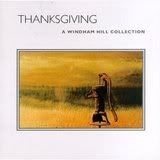
Add: "Apples and Bananas," the "Turkey Song," "There Was an Old Lady Who Swallowed a Fly," "Down by the Bay," "Popcorn," "Old MacDonald Had a Farm," and for quiet DEAR time, the "Thanksgiving" album by Windham Hill.
thanksgiving
December:

"Must be Santa," "Dreydl Song," "Rudolph the Red-Nosed Reindeer" (classroom buddies love teaching my students the Batman version), "Jingle Bells" (anyone else have students who ask "Teacher, what's a SOAPENSLAY?"), "TheTwelve Days of Christmas," and "Feliz Navidad."

Our clean up song is the "Christmas Medley" by Grimethorpe Colliery Band, and my students love to dance to the beautiful rhythms on this album:
kwanzaa


January:

raffi

Raffi gets some more airtime with "Baby Beluga" and "Brush Your Teeth," and the students love to sing about "Frosty the Snowman" when they look at compound words that begin with "snow." My students warm up and get to cleaning up the room when they hear Gordon Lightfoot sing "Old Dan's Records," (just more proof that I'm Alaskan) but I'm sure they'd love some wonderful music from China for Chinese New Year. Any suggestions?

February:

Our kindergarten list experiences a little bit of growth with patriotic music for Presidents' Day, "Sing a Song for Martin," and "Concetta" by John Tesh. I've had several families go and purchase
tesh to get their children to clean up at HOME!


March/April:

My students are hoppin' to songs like "Little Bunny Foo Foo" and "The Bunny Hop," but they love to sing "Five Little Ducks," "Five Speckled Frogs," and "Five Little Monkeys" too. What is it with the number five? As we enjoy stories by Dr. Seuss, my students enjoy the Moxy Fruvous song "Green Eggs and Ham." Weird Al even has his own version, but it's.... migraine inducing.

Clean up song: "Michael's Ride" from the Waking Ned Devine Soundtrack.

May:

For the end of kindergarten, we enjoy the music from the entire year, and add songs such as "Raining Like Magic" (hey Raffi sure does get around!) and "Celebration" by Kool and the Gang.

Now get out there and SHAKE YOUR SILLIES OUT!
dancing

Wednesday, September 12, 2007

Home Decor sites...some of these treasures could end up in my classroom!

Have I mentioned I love home decor? I've been treasure hunting, and I've found some awesome items and inspiration for my home and classroom at the following sites:

Designers Block - THIS is a woman I'd enjoy exploring with! Check out the funky grass rings!

Decor8 - for the color-craving-creature in all of us!

Absolutely Beautiful Things - with tons of inspiration photos for making one's home a sanctuary and escape from the maddening world.

and finally, Hostess with the Mostess - a site, I admit, I only visited because of the title (which my mother bestowed upon Shannon a few years back- only being a teacher, it was "Hostess with the Mostest!").

These sites are sure to take your mind off of your worries this week, enjoy! gerbera

Tuesday, September 11, 2007

Which site?

Okay, so I'm finding my blog looking prettier at the following and I'm considering transferring everything there to have it all in one, pretty, easy-to-blog location- let me know which site you prefer.

http://mrssommerville.edublogs.org/

"Them versus Us"

lips movePerhaps it's a totally new concept: administrators, teachers, parents, and students all working together, as a team, in our educational system. No "them-versus-us" mentality that does nothing but create opposition, miscommunication, hurt feelings, and even underhandedness, but actual teambuilding with truly *shared* goals.

I had an interview yesterday at a local elementary school. It was a school that I had taken my resume to earlier this summer. I didn't hear back from the principal until a week and a half ago, when a one-line email message popped up in my in-box: "If you're still wanting a position, call my cell this morning" with the principal's phone number as the signature. I called the cell phone, reached the principal's voice mail, and left an affirmative "yes I'm available to interview" message with my phone numbers. I received a response yesterday morning in the wee hours in the form of another one-line email message: "Can you come in for an interview at 3:30 today?" I emailed back that yes, I was looking forward to meeting the principal at three thirty, and I then inquired for which grade or position I was to be interviewing. No response. I downloaded the Texas Education Knowledge and Standards (TEKS) parent handout for grades K-5, thought about how I'd respond to the questions I anticipated being asked, and enjoyed the rest of my morning with my toddler.

I arrived at the school fifteen minutes before my interview, and was pleased to find the neighborhood parents friendly, and the staff helpful. The students were full of energy as they left for the day, and smiles abounded. All GREAT signs! I signed in at the office, and was soon joined in the waiting area by another teacher applicant also there to interview. She had no idea which grade or position was needing to be filled either, but we quickly found some mental direction when the secretary made an announcement over the intercom asking that all third grade teachers report to the principal. I quickly reviewed the TEKS handout for third grade, made sure my information packet and resume were ready to go and crinkle/crease-free, and talked with kindergarten students who were waiting to be picked up at the office. (The students were wearing AWESOME "10th Day of School" crowns, I HAD to admire them!)

The other applicant was taken to be interviewed first by the principal, who had quickly introduced himself to us as the third grade teachers congregated. After twenty minutes, I saw the first applicant quickly leaving the building looking a bit down and unsure of herself. I wondered if she had been overwhelmed by the number of people interviewing her, or was experiencing the "I-should-have-said-this" aftershock that tends to hit people after presenting themselves for consideration to a bunch of strangers. The principal came and escorted me to the interview room, and I was pleased to see four cheerful teachers waiting.

I introduced myself, and the principal asked me to tell the teachers a bit about myself before getting started with the interview questions. No doubt you've noticed, dear readers, that I'm a bit of a rambler, so once I realized I'd gotten off on a tangent, I quickly added humor to the mix, and apologized for getting off-subject. The principal expressed that he was in a hurry and that we'd need to get the questions underway, and asked the teachers to begin the interview. I was prepared to answer questions about my teaching experience, my educational background, teaching philosophy, teaching style, views on curriculum and instruction, and demonstrate familiarity with Texas and District specific issues such as the Texas State Standards, the district's testing policies regarding NCLB, and how I'd work with bi-lingual students and staff. I also figured I'd be asked about my discipline policy and questioned as to how many extra duties I'd be willing to take on.

I was asked to describe my teaching style, to detail how I'd ensure all of my students experienced success, who I thought was responsible for discipline in the school, how I communicate with parents, and how I'd treat my grade-level colleagues. Nothing else, so I worked to infuse my responses with pepperings of the other information I felt was pertinent (that wasn't being asked for), and was comfortable adding humorous examples and positive messages about working with collegial groups and teambuilding. The response from the teachers was shared laughter, nods of what I hoped was approval, and an overall relaxing of tone as the interview progressed. The response from the principal however, was nothing short of.... bristling, to include the folding of his hands, and the crossing of his arms in front of his chest.

To round out my answer to how I'd treat my colleagues, I responded that I would treat my colleagues the way I treat my students, as "whole people." I may need the E.L.L. teacher's help with some of my students, but I'll remember that when working together in my room, or on committees, or after-school projects, we ALL have families to get home to, so it's important to work effectively so that we're not living, eating, breathing and sleeping at school all the time. And hey, even if I don't get to work with everyone on the staff as much as I'd like to, I'm happy to bring cookies to the staff room once a quarter for staff support!

Lots of additional smiles, laughter, nods and "thank goodness'" from the teachers, immediatly followed by the principal indicating the interview was over saying "Well, I just feel I need to close this interview by mentioning the following. This is a DIFFERENT school. Teachers HERE give 150% and that's what makes us effective. You might want to consider that if you are hired to teach here."

Wouldn't you know it, I had a response.

"Thank you Principal ______________, I see exactly where you're coming from. Since I've taught for twelve years, been hired by three school districts, and have received glowing letters of recommendation from each one, it's obvious that I take my job very seriously and I'm good at it. But my own childrens' band concerts, volleyball games, and science fair projects are just as important as my students, so I won't be staying here until nine p.m. each evening. Teachers who sacrifice their marriages and their families to martyr themselves for their students are, in my opinion, living grossly unbalanced lives."

He thanked me for my time, stood up, and walked me to the door, at which point I gave him my resume and information packet. I'm sure they were tossed in the trashcan as soon as I walked out the door.

Something tells me I won't be teaching third grade at that school this year, which is a shame because I rather enjoyed the dynamic I experienced in my short time with the other teachers and I liked the feel of the school environment. But I had done a little homework before the interview, and found out that this was the principal's first year at this particular school, and that the school's science scores fell below the state's average, and that the school, while "academically acceptable" hadn't received public kudos or accolades for a whopping year. None of these details bothered me until experiencing the principal's reaction to my responses during the interview.

First-year principals, like first-year ANYTHINGS, are eager to prove themselves. In today's Blue Ribbon/Gold Star/Sparkley Crown School competition, and with the requirements set by NCLB, I understand that administrators, like teachers and students, are pushed to perform, and pushed to produce the results that have been labeled as "indicators of success." But meeting administrators that desire the banners, the photo ops and the publicity at the cost of the well-being of their teachers bothers me.

I'm qualified. I do a good job. As a rather simplistic job description, I'm paid to require other people to think. But I'm tired of meeting administrators who don't like the fact that I myself have opinions and am willing to share them, especially when I'm asked what they are in an interview. I don't challenge administrator's authority, nor do I disrespect their role, but I'm very clear on what I think that role is: school administrators are employed to make sure I can do MY job effectively for our students. A principal might hire me, but it's his or her job to provide safety plans, collegial group time, and various other resources for any student and/or teacher support that is necessary. Principals are guides, to help me and my colleagues achieve not just OTHER peoples' goals for our school and district, but the goals we set for ourselves and our students. Principals should be advocates not only for students, but for teachers, support staff, and other paraprofessionals whose jobs make student learning possible each day.

This "them versus us" is getting old. Am I really the only person who feels this way?

Saturday, September 08, 2007

I've been exploring...

...and here's what I found:

Bill Lucas' Studying the Creation of Kindergarten

Kindergarten Skills by Shallowford Falls (I'm sending this one to my sister since she's homeschooling my nephew now)

Internet for Classrooms (just some more help as our technology in early childhood education/teaching practices continues to evolve along with everything else!)

The Special K Kindergarten Page

And finally, for Jan Brett fans everywhere (check out her new calendar!)

It's time for another cup of coffee.


precious

Friday, September 07, 2007

In Practice Blog Site

Check out the new blog, "In Practice." It's linked on the right of this page!

Thursday, September 06, 2007

Flies and Sugar

fliesMy mother used to tell me "you can catch more flies with sugar than with vinegar." Sometimes she substituted "honey" for "sugar," but vinegar always stood firm. As a child I never wondered about the meaning, I just wondered what in the world my mother was doing TRYING to attract *flies*! As I grew older and became interested in making more friends in school, I realized that if I smiled, offered a helping hand, or witheld a verbal or physical "zing" in response to to any offense, I (at the very least) earned polite avoidance from would-be bullies or ill-tempered classmates. Thankfully, I managed to go above and beyond the bare minimum response and made some amazing friends who vibrantly color my school memories from Barrow, Delta Junction, Fairbanks, and beyond to this day.
As a teacher I've followed the Golden Rule even when it wasn't the easiest decision to make, nor my first reaction. I've remained patient, bitten my tongue, and politely steered when necessary. I've taken the time to listen, even if the subject was off-topic, or was a tool of avoidance on the parents' part. Behaving this way has been my investment in my students, their families, my colleagues, and my job. Extra time and patience in the beginning makes it more efficient later on. Parents don't jump to conclusions, don't knee-jerk react, and colleagues don't feel they are working in a hostile environment. Relationship building doesn't necessarily mean we like eachother, but it does mean we choose to get along and follow an acceptable set of social rules. Parents might think my teacher dresses are a little hokey at times (hey, five year olds LOVE turkey and Pilgrim dresses in November!), but they know their children are safe and eager to learn with me.

After my job as teacher has ended, I've gone on to enjoy friendships outside of school with former parents as well, staying in touch, bending an ear, sending cards, going for coffee... which is when I've been able to shift my persona and responsibilities from professional teacher to sincere friend. As a side note, I'm a little quirky in that regard: I don't believe in "crossing the line" during the school year. I don't attend Tupperware, Longaberger or even Pampered Chef parties, nor do I go out to dinner or visit my students' homes until I'm DONE being "the teacher." Mutual respect of privacy is a good thing, though as a kindergarten teacher, there's not much about a child's home life that I don't know about after the first two weeks of school. (Parents, remember there is a "pretend" or "house" center in my classroom. Just as you see replays of "me" each evening as your child plays in his/her room, I see replays of YOU daily!)

As a mother, I have enjoyed the professional courtesy given to me by my friends and colleagues with whom I've worked. I've known which teachers have the most complimentary teaching style for my childrens' personalities and interests, I have had the inside scoop on school activities, programs and policies, and I've been privy to the "real" bottom line educational information that falls under Teacher-ese headings such as "curriculum," "standards/benchmarks," "assessments," "percentiles," "sub-groups," "schema," "cognition," "literacy," and "advanced placement." I get *details* and am not merely told if my children are "doing well in school" and thanked for my support.

After defining, setting, and following my own personal and professional standards, I will admit to enjoying coming in under the radar when we move somewhere new and I'm visiting my childrens' schools for the first time. I watch and listen as teachers and support staff help register students, give tours of the building, and explain the rules and school policies. I'm very pleased when I hear a common-speak that flows between Teacher-ese and the language of parents and families. It shows me that other teachers, school staffs, and administrators (districts?) have made that investment in their students and families (or are building upon it) that I make each year with my own class. It usually doesn't take too long after talking with a teacher or school administrator before I'm discovered however, and then the sharing of the inside scoop begins. My poor kids roll their eyes, ask if they can look for their lockers and seek out the band room as I talk, teacher to teacher, with my new partners in education. Borrowing from Martha, it's been "a good thing."

Our family attended our daughter's mandatory volleyball meeting earlier this evening. Following the school's initial punitive and reactionary tone from the first week of school, the coaches and presenters continued by showing all parents in attendance a twenty minute video required by the district. Various school and sports representatives made it very clear via video that they expected us, the parents, to "be better spectators and parents" by not "ridiculing or intimidating another team or its fans," understanding that "holding a ticket to a school event is not a license to assault others verbally or to be otherwise obnoxious," and not yelling at our childrens' coaches. Just more proof of how things have changed since I was in school. My parents would have never embarassed themselves, me, or my teammates by behaving horribly, and none of my coaches yelled at or berated me to try to get some desired response. My friends didn't boo, but they did cheer louder for my team than the other, and we all shook hands and went out of our way to either be good hosts or good guests when road trips took place. Alaska may be a very large state, but it's a very small community. You either know someone personally, or you know someone who knows someone from each town, village, city or borough. Being nice... "sugar..." matters.

Yes, I understand that this school's and district's tone has been set by whatever happened before our family arrived here, but my "sugar/vinegar" alarm has been going off for almost three weeks now, and I'm becoming depressed by the thought that there is a very good chance it will not cease in the next nine months.

Closing comments from this evening included a promise from the coach that she'd make sure volleyball was fun for the girls this year because NEXT YEAR with "that other coach" was going to be "rough." WHAT?!?!?! She also asked that we NOT call the principal or athletic director for the school district until we had talked to her first. Fair enough, but her reasoning was this: if we need to know why she "yelled at" our children during practice or during games, it would be more appropriate to ask her directly than to go and complain to others.

I understand the flies and sugar. Now I'm wondering what kind of eighth grade volleyball requires yelling, verbal reprimands, and possibly public humiliation as coaching techniques.

Tuesday, September 04, 2007

What I'm Learning about NOW!

* Pillowfighting with two-year-olds each morning. One particular child, in fact! Concept to remember: While participating in a pillow fight with a young child, watch out, because things like toy buses, toy trucks, and board books *might* accompany the down-filled THWAK that you're expecting! Ouch! My eye!

* The wide world of Blogging. I have this blog, my MySpace page, and I'm now participating in some sort of "wiki" addressing technology in education. My first entry was HUGE. Wordy. Something to produce eye strain. Sigh. And I've been "tagged" and had my page "linked" to others. Concept to remember: never stop learning. I'm looking up blog definitions daily since I'm a late bloomer. Why is commenting good for bloggers? Thanks to Chris Garrett, the author- hope I'm learning how to link appropriately!

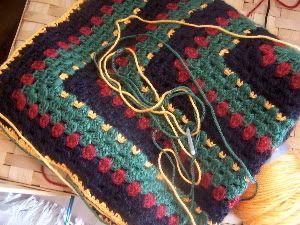
* Stress relief and hobby time. With so many friends pregnant (found out about another one yesterday!), I've had the perfect reason to crochet my little heart out! With concerns over employment, the realization my babies are growing up (eldest son turned seventeen two days ago), and wondering where Uncle Sam will send us next, I again have the perfect reasons to crochet. So I've found some fun patterns in books and online, but the basic granny square is still my favorite. Concept to remember: self-care is a good idea as is letting one's creative juices....crochet! Here's the latest blankie:* Creating a homeschool curriculum. Yep, after the nightmare that was my youngest nephew's kindergarten experience, my sister has decided to homeschool him. I'll be digging through my classroom materials, manipulatives, and book lists to share with her to get the little guy feeling better and on track. I'm guessing he'll enjoy Zoo Phonics, a program I've used with almost all of my kindergarten classes after Diane introduced it to me years ago! Concept to remember: sharing is good, and so is knowing when to ask for help.

Now all I need to do is figure out the best way to win the lottery! If a Wiccan teacher can do it, then so can I!